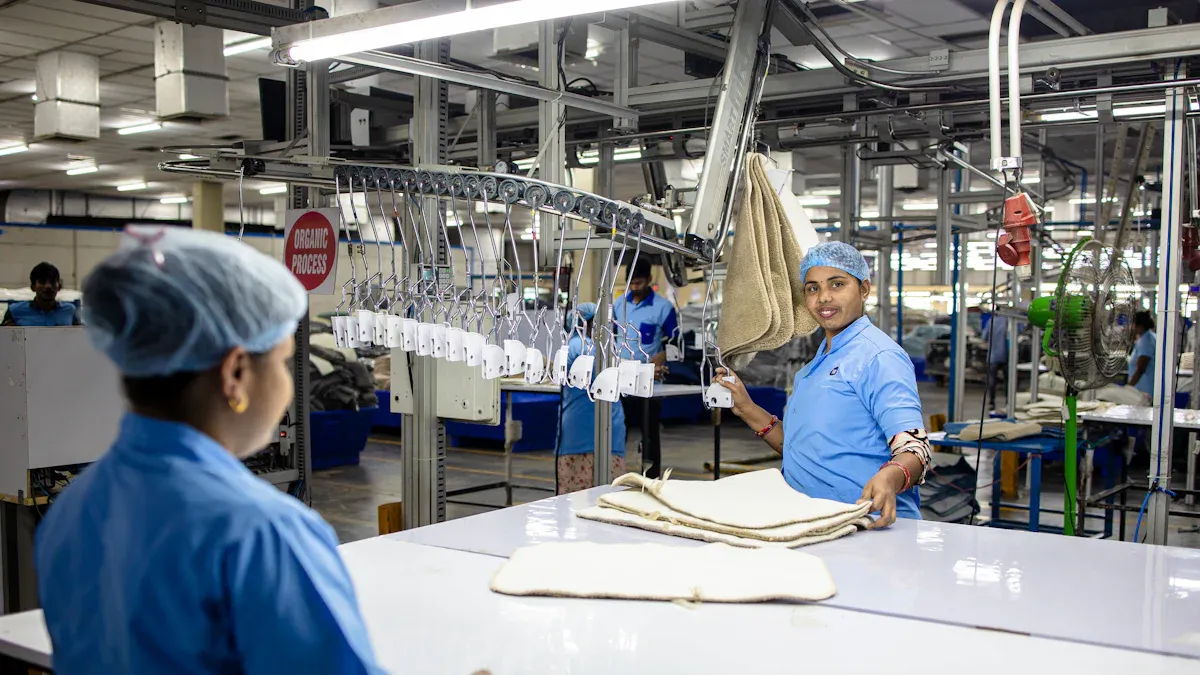
Consumers value understanding the complete journey of their premium trousers. This knowledge offers assurance regarding the garment’s quality and ethical production. Truly premium trousers derive their integrity and inherent value from meticulous material sourcing and expert craftsmanship. These foundational elements distinguish exceptional apparel in the market.
Key Takeaways
- Our premium trousers start with carefully chosen fabrics. We pick materials like wool and cotton for their quality and comfort.
- We use advanced machines to cut fabric precisely. Skilled workers then sew the pieces together to make strong, good-looking trousers.
- We care about fair practices and the environment. We make sure our materials are sourced ethically and our factories treat workers well.
The Foundation of Our Premium Trousers: Fabric Sourcing

Selecting Materials for Unmatched Trousers Quality
The selection of raw materials forms the bedrock of premium apparel. We meticulously choose fabrics that offer superior quality, durability, and comfort. Wool, for instance, stands as a common material for men’s trousers. It is known for its durability and aesthetic appeal, making it particularly well-suited for colder weather or formal occasions. Beyond wool, various other fabrics contribute unique properties to high-quality garments.
| Fabric Type | Characteristics | Suitability | Drawbacks |
|---|---|---|---|
| Denim | Thick, mid- to heavy-weight, extremely durable, comfortable. Can be processed for softness/lightness. | Everyday, casual trousers. | Processing may affect appearance, texture, durability. |
| Polyester | High abrasion and wrinkle resistance, vibrant colors, not easy to fade. | Cargo pants, work pants, activewear, travel pants. Often blended. | Poor breathability, static electricity, potential skin irritation (pure). |
| Canvas | Tough, durable, strong abrasion resistance, sturdy, excellent wind and water resistance. | Outdoor and highly active environments, casual pants, work pants, outdoor trousers. | Thick texture, not suitable for hot seasons or high breathability needs. |
| Spandex (Elastane/Lycra) | High elasticity and resilience, excellent stretchability, snug fit, lightweight comfort, good breathability, high durability, resistance to deformation. | Form-fitting pants (leggings, activewear, jeans) for contouring and flexible movement. | N/A |
| Rayon | Smooth texture (similar to silk), soft touch, comfortable, good breathability, moisture absorption, easily dyed, minimal fading. | Relaxed and loose styles (capri pants). | Average durability, prone to deformation. |
| Corduroy | Synthetic, high density, excellent insulation, not easily worn or torn, good durability. | Winter pants, flare pants, form-fitting pants, high-waisted pants. | Poor breathability, low wrinkle resistance. |
| Cotton | Natural, comfortable, lightweight, breathable, flexible, doesn’t trap heat or odor, good moisture-wicking. | Versatile for any season/style, sportswear (blended), children’s pants. | N/A |
| Linen | Soft, lightweight, harmless, high tensile strength, good corrosion resistance, absorbs sweat/moisture, easy to dye, high colorfastness, not prone to static electricity/dust. | Summer pants (wide-leg pants). | Prone to wrinkling and deformation. |
| Silk | Lightweight texture, soft and smooth touch, exceptional comfort, unique sheen, luxurious feel. | Wide-leg pants, jumpsuits, summer wear, premium trousers. | Lacks durability. |
| Wool | Excellent warmth, moisture-absorbing properties. | Casual styles, business styles, wool trousers, tweed pants. | Can sometimes cause allergies. |
Ethical Sourcing Standards for Our Trousers
Our commitment extends beyond material quality to ethical sourcing. We ensure every fabric used in our trousers meets stringent ethical standards. Several industry certifications guide our sourcing decisions, guaranteeing responsible practices throughout the supply chain.
- WRAP (Worldwide Responsible Accredited Production): This certification emphasizes lawful, humane, and ethical manufacturing practices globally. It covers principles like compliance with laws, prohibition of forced labor and child labor, and health and safety measures.
- B Corp Certification: This certification recognizes companies committed to high standards of social and environmental performance, transparency, and accountability. It evaluates their impact on employees, customers, suppliers, community, and the environment.
- Fair Trade Certification: This certification ensures fair wages, safe working conditions, and community benefits for workers. It promotes equitable partnerships, fair compensation, gender equality, and sustainable practices.
- SA8000 (Social Accountability International): This global standard ensures adherence to ethical and socially responsible manufacturing practices. It bases its principles on international human rights conventions, covering aspects like child labor, forced labor, health and safety, and freedom of association.
- BetterWork: This joint initiative by the ILO and IFC improves labor conditions in the garment industry. It enhances productivity, competitiveness, and social responsibility by supporting factories in implementing labor standards.
Partnering with Sustainable Mills for Trousers Production
Partnering with sustainable textile mills offers significant environmental benefits for trousers production. This approach ensures ethical material sourcing and ecological practices. It involves choosing suppliers who provide organic cotton, recycled fibers, and low-impact material options. Such partnerships are crucial for reducing carbon emissions, conserving resources, and protecting the planet. They enable businesses to lower their environmental footprint.
Stella McCartney exemplifies a brand successfully implementing these practices. It builds its business through exclusive associations with ethical suppliers that produce sustainable products. Certification systems like GOTS (Global Organic Textile Standard) and OEKO-TEX verify the sustainability claims of these suppliers. This ensures transparency and accountability in their environmental efforts.
Crafting Excellence: The Manufacturing Process of Our Trousers
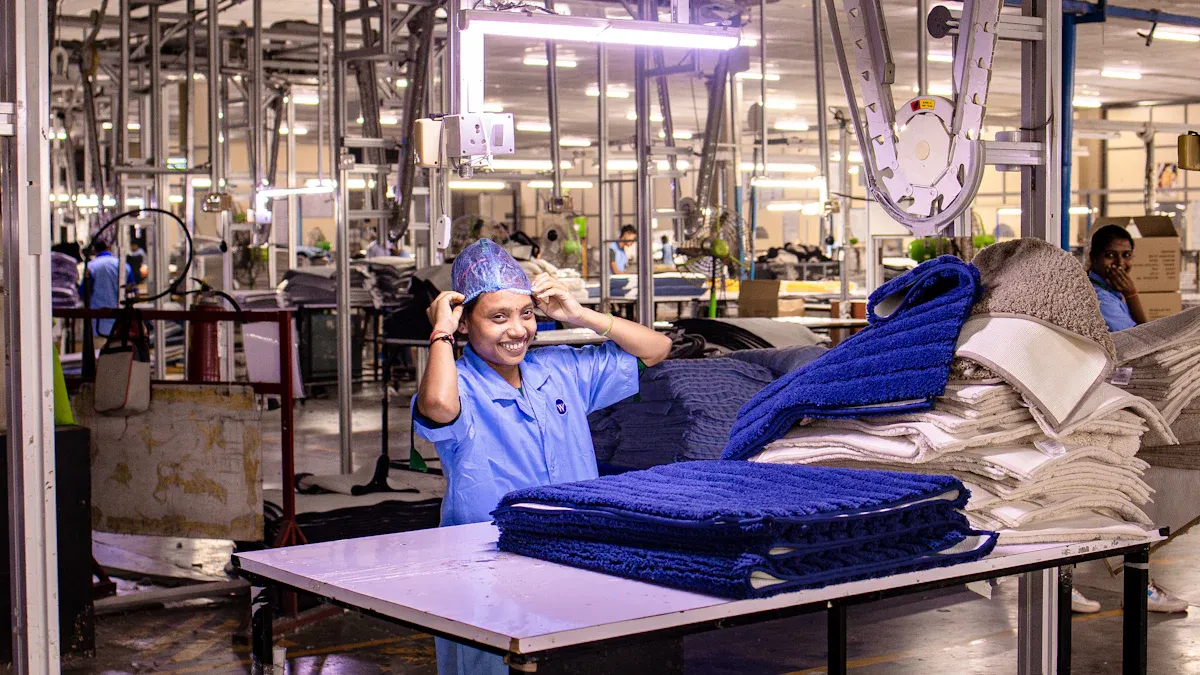
Precision Cutting and Assembly for Trousers
The journey from fabric to finished garment begins with precision cutting. This crucial stage ensures each component of the garment meets exact specifications. Modern manufacturing employs advanced technologies to achieve unparalleled accuracy and efficiency.
Manufacturers utilize several cutting methods:
- Die Cutting: This method uses a device similar to a cookie cutter. Sharp edges press against fabric layers. It works well for repetitive shapes, such as jeans pockets or leather belts.
- Fully Automatic Cutting Machine (CNC): This machine cuts fabric layers based on computer commands. It is ideal for high-volume manufacturing. Auto-spreaders position fabrics on the cutting table. Programs loaded into the computer automate the entire activity. This method offers higher production, saves time, increases productivity, reduces manpower, and conserves fabric.
- Knife Cutting Machine (CNC): This machine combines oscillating, tangential, and drag knives with router bits. The blade moves on the material surface following a configured tool path without heat. It provides high precision, consistency, and reliability. This method is environmentally friendly and safe. It produces smooth cutting edges without burrs. It also allows for cutting square corners, angled edges, semicircles, and segmental arcs with extreme precision. This increases efficiency, reduces cycle time, and minimizes material waste.
- Laser Cutting Machine: This computer-controlled machine cuts fabric layers using powerful laser rays, which vaporize the material. It offers precise, computer-controlled cutting.
- Water Jet Cutting Machine: This computer-operated method propels a tiny jet of water at very high pressure through the fabric. Its usage is limited, primarily for certain fabrics and leathers, especially in the shoe industry.
- Ultrasonic Cutting Machine: This machine vibrates its blade 20,000 to 40,000 times per second. It can cut nonwoven fabric. This method is environmentally friendly, producing no substantial crumbs, wastewater, noise, or smoke.
- Automatic Blade Cutting: This is a highly developed and widely used computerized cutting system. Numerically controlled knives cut multiple plies with great accuracy and speed. Operators communicate directly with the main control unit via a command console. This eliminates the need for paper markers.
- Laser-Beam Cutting: Sometimes used for men’s suits, this method cuts a single layer at a time. A computer directs the concentrated light beam.
The Gerber Auto-Cutting Machine stands as a prominent example. It was the first machine developed for automatic garment pattern cutting, transforming the textile industry. Gerber Cutters are easy to use and operate. They function as CAD-CAM machines with automatic data transfer to the CAD system. They include automatic spreading, saving time, energy, and manpower while improving quality. These machines possess high intelligence for guiding the cutting process. They come equipped with proper setups for rapid and efficient operation. Their self-adjusting intelligence improves workflow efficiency and reduces lead time. They automatically adjust speed and maintain cutting quality for optimal first-run output.
Artisanal Stitching Techniques for Durable Trousers
After precise cutting, skilled artisans assemble the garment components. This stage involves various stitching techniques, each contributing to the garment’s durability and aesthetic appeal. Expert sewers meticulously join fabric pieces, ensuring strong seams and a refined finish. The choice of stitch type and thread depends on the fabric and the garment’s intended use. Reinforced seams, for instance, provide extra strength in high-stress areas. Attention to detail during stitching ensures the garment maintains its shape and integrity over time. This artisanal approach elevates the quality of every finished product.
Rigorous Quality Control Checks for Every Pair of Trousers
Quality control is an ongoing process throughout manufacturing. It ensures every garment meets the brand’s high standards. Manufacturers implement rigorous checks at multiple stages.
Key quality control checkpoints include:
- General Information: Verify style and size labels for inventory and identification.
- Workmanship: Inspect for faults like open seams, incorrect graphics placement, and unfinished edges.
- Measurement and Sizing: This is crucial for garments. Measure from crotch to hem (in-seam) and other critical points against specifications.
- Fabric and Material: Confirm fabric composition, weight, and texture match specifications.
- Trims and Accessories: Check buttons, zippers, and labels for specification alignment and functionality.
- Packaging and Presentation: Ensure appropriate packaging materials and clear labeling.
- Compliance and Safety: Verify adherence to safety regulations and necessary certifications.
- Defect Classification: Categorize defects as critical (safety risks, incorrect sizing), major (visible flaws affecting usability), or minor (small issues like loose threads).
Beyond these general checks, specific considerations ensure premium quality:
- Fabric Stability: Control shrinkage, recovery, and long-term fabric behavior through testing and pre-evaluation.
- Color Consistency: Ensure lab dips, sample fabric, and bulk fabric colors remain aligned.
- Size Grading Accuracy: Verify fit consistency across the entire size range, not just the base size.
- Construction Durability: Review seam strength, stitch stability, and overall construction performance early in the process.
The manufacturing process follows a structured inspection sequence:
- Fabric Inspection: Before cutting, fabric is checked for weaving defects, shrinkage, and GSM variations using a 4-point system.
- Cutting Inspection: Markers, cutting accuracy, and ply count are verified to ensure dimensional correctness of each piece.
- In-Process Inspection (Inline): During assembly, stitch quality, seam allowance, and label placement are monitored in real-time.
- End-Line Inspection: A comprehensive review of appearance, measurements, workmanship, and trims is conducted.
- Finishing Inspection: Thread trimming, ironing quality, stains, and packaging are verified.
- Measurement Inspection (FRI): Garment dimensions are measured against specifications.
- Final Random Inspection (FRI) / Pre-Shipment: A final check on packing and overall quality occurs before dispatch.
Beyond Production: Our Commitment to Ethical Trousers
Environmental Stewardship in Trousers Manufacturing
Our brand prioritizes environmental responsibility in all manufacturing processes. We actively seek methods to reduce our ecological footprint. For example, recycling cotton significantly reduces water consumption by 98% compared to non-organic cotton. This drastically lowers the garment’s overall environmental impact, including its carbon footprint. We also focus on reducing raw material consumption by opting for higher-quality, more durable items. Our processes incorporate recycled fibers, such as recycled cotton or polyester. We encourage suppliers to utilize renewable energies and more efficient processes, further minimizing environmental harm.
Fair Labor Practices for Trousers Production
We uphold stringent fair labor practices throughout our supply chain. Our commitment ensures ethical treatment for all workers involved in producing our garments. We partner with organizations that adhere to international labor standards and certifications. These include Fairtrade Cotton, which guarantees fair prices and prohibits forced or child labor. The World Fair Trade Organization (WFTO) accredits companies based on 10 Fair Trade Principles and International Labour Organisation (ILO) Standards. Fair Wear Foundation (FWF) verifies and improves supply chain conditions. Global Organic Textile Standard (GOTS) requires high labor standards, while OEKO-TEX advocates for traceability and safety.
Traceability and Verification for Our Trousers Supply Chain
Transparency forms a cornerstone of our ethical commitment. We implement robust systems to verify the traceability of our textile supply chain. This ensures accountability from raw material to finished product. For instance, DNA marker technology provides full traceability from fiber to finished garment. Companies like Soorty Enterprises use this method, partnering with Rieter and Haelixa. They apply unique, invisible DNA markers to fibers during yarn production, specifically in Rieter’s UNImix B 72 machine. This creates a verifiable fingerprint for each textile batch, ensuring authenticity and transparency for every pair of trousers.
Our brand remains dedicated to transparency and quality in every pair of trousers. An informed purchase holds profound value in the premium market. We continuously strive for a more responsible and sustainable future, ensuring ethical practices from fabric to finish.
FAQ
How does the brand ensure fabric quality for its trousers?
The brand meticulously selects materials such as wool and cotton. It prioritizes superior quality, durability, and comfort. Rigorous testing confirms fabric composition and performance.
What ethical standards guide the brand’s sourcing practices?
The brand adheres to certifications including WRAP, B Corp, and Fair Trade. These standards ensure lawful, humane, and responsible practices throughout the supply chain globally.
Which advanced technologies does the brand use for precision cutting?
The brand utilizes advanced technologies like Fully Automatic Cutting Machines (CNC) and Gerber Auto-Cutting Machines. These ensure unparalleled accuracy, efficiency, and minimal material waste.
Post time: Dec-27-2025